A grassroots ruck built to honor U.S. Air Force Pararescuemen and test men, gear, and grit in real conditions.

PJ Ruck After Action Review (AAR)
On a Saturday in Louisville, Kentucky, a small group gathered with one purpose: to honor some of the most selfless operators in the U.S. military and test themselves in a way that carried meaning.
This was the first PJ Ruck, a six-hour grassroots event designed to pay tribute to U.S. Air Force Pararescuemen, known simply as PJs. Their mission is clear and uncompromising: rescue, recover, and return American forces from the most dangerous environments imaginable.
Their motto says everything.
That Others May Live.

The Why Behind the Ruck
The PJ Ruck was created and led by Luke, a member of F3 Louisville and the organizer of ruck events for his local chapter. Luke was introduced to GORUCK years earlier through F3, where rucking became a consistent part of training and community.
This event wasn’t built to mimic military selection or replicate real-world combat. It was built out of respect.
Luke’s goal was simple: express gratitude, raise awareness for the men who do this work for real, and create an experience that required teamwork, endurance, and responsibility under load.
By the end of the day, participants raised more than $1,100 for the Kentucky Special Operations Foundation in support of airmen and their families.
Six Hours, One Mission
Ten participants took part in the inaugural PJ Ruck. The event was broken into three phases, each inspired by the skills Pararescuemen rely on.

The day began at the Mary T. Meagher Aquatic Center in Louisville, the same pool used by operators from the Kentucky Air National Guard’s 123rd Special Tactics Squadron. Under the guidance of a retired PJ, the group spent nearly an hour in the water working through pool confidence drills. Flutter kicks, underwater swims, treading, and fatigue-based movements tested composure and control long before the ruck ever began.

From there, the group transitioned into one hour of skills training and mission preparation. Participants received hands-on instruction in bleeding control, tourniquet application, basic first aid, and technical rescue concepts. Maps were issued, teams were assigned, and the mission brief was delivered.
An American pilot had been shot down behind enemy lines.
It was time to move.
The Rescue
With rucks loaded and teams split into groups of three, the participants rucked into Cherokee Park under low-visibility conditions. The terrain was steep, wooded, and unforgiving. At the first objective, teams crawled through brush to reach a simulated crash site, securing the area and searching for sensitive materials.
Intel soon pointed them deeper into the park.
Two miles later, they located the downed pilot suspended in the tree canopy by his parachute. After authentication, the teams executed a technical rescue, bringing him safely to the ground. A simulated leg wound required immediate care, and a tourniquet was applied before movement resumed.

The pilot weighed more than 160 pounds.
Teams rotated carrying him on a litter over multiple miles, maintaining pace while managing fatigue. Every step required communication, shared effort, and trust.
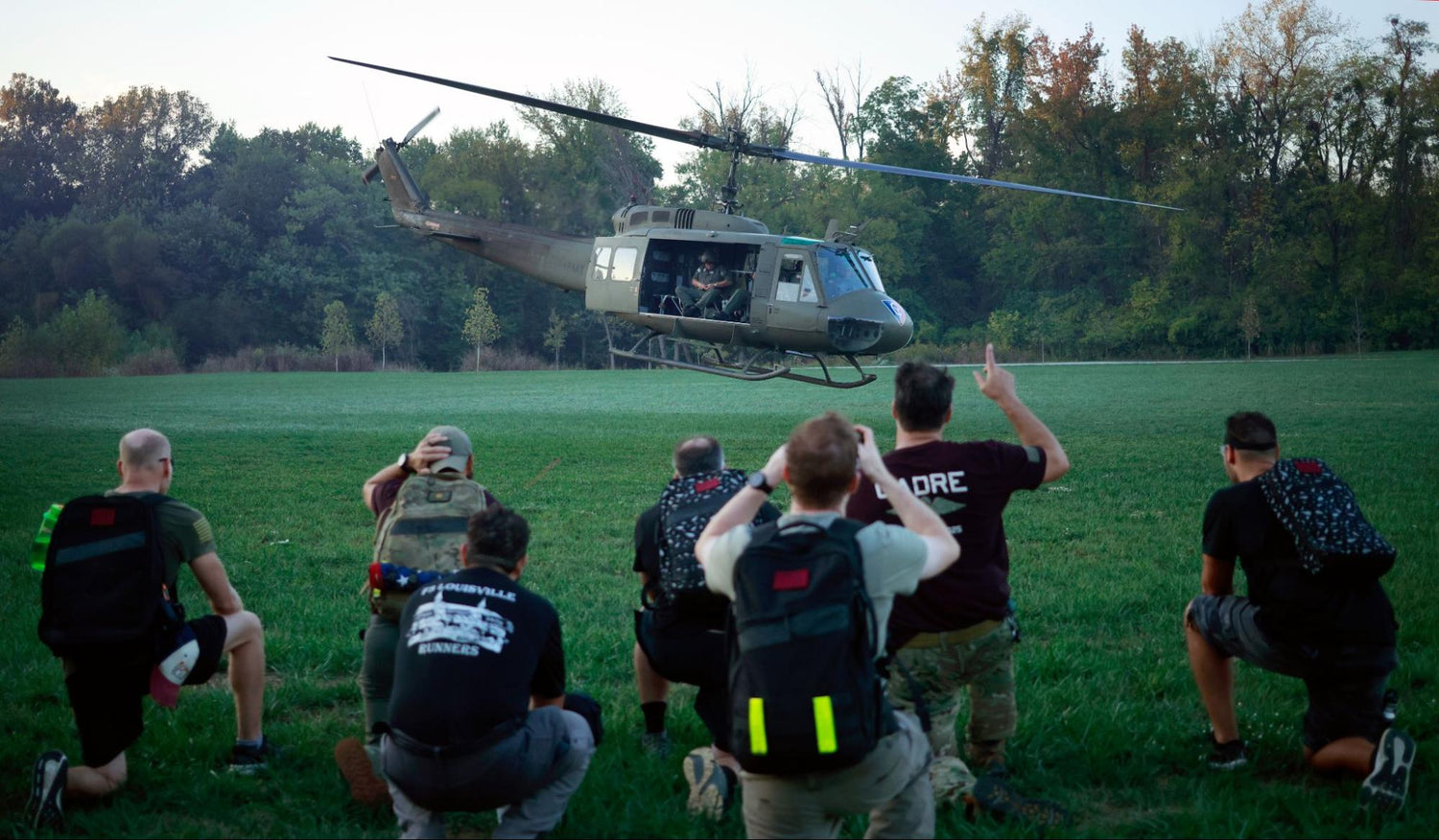
Eventually, the group reached a predetermined landing zone just outside the park. As rotor blades echoed overhead, a UH-1 Huey descended for a textbook casevac. Smoke was popped. The pilot was loaded.
Mission accomplished.
Carrying the Weight That Matters
Each participant carried more than equipment that day.
Every ruck included a laminated photo of a fallen PJ or Rescue Squadron aircrew member who gave their life in the Global War on Terror. Names and faces served as a constant reminder of why the event existed and who it was meant to honor.
The ruck concluded back at the starting point with memorial pushups in their memory.
Gear That Disappears Into the Work
The PJ Ruck was Luke’s vision, built through months of planning, care, and respect for the men it was meant to honor. GORUCK’s role in this story is not one of ownership or credit.
Like anyone reading this, we’re simply witnesses to what Luke and the participants created.
The gear used that day was a personal choice. Luke and many of the men involved already train and ruck together regularly, and when it came time to execute a long, demanding mission built around water, movement, and weight, they chose the gear they trusted most to support that effort.
No one was paid. No one was asked. No one was required to use anything specific.
They showed up for a purpose and wanted equipment that could disappear into the work and hold up through hours of swimming, rucking, crawling, casualty carries, and miles of uneven terrain.
We’re honored that people like this choose to use GORUCK gear the way it’s meant to be used: pushing themselves, carrying weight for others, and honoring the brave men and women who serve.
Looking Ahead

The PJ Ruck was Luke’s first time leading an event of this scale. He plans on running this again in October, CLICK HERE for PJ Ruck 2026 Updates.
For those who took part, it wasn’t just a workout. It was a reminder of service, sacrifice, and the responsibility that comes with carrying weight for someone else.
That Others May Live.
For the full article written by Luke CLICK HERE.